Welcome to DIY-SciB.org

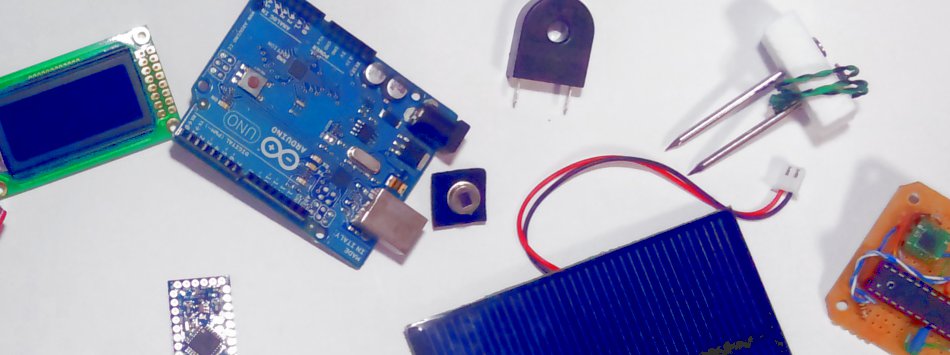
Do It Yourself science and laboratory gear can save a lot of money, and provide plenty of opportunities for learning in the process! DIY-SciB.org specializes in Arduino sensors and science projects.

slideshow 1 slideshow 2 slideshow 3

Webshop now up!

Just a little note to let you know that my webshop is now live.
I finished up testing the payment system through paypal tonight, as well as verified that shipping calculations for Japan Post small packet services are (mostly) correct.
I am starting pretty small, with only in stock inventory. I will be adding new items as I find things from Japan that may appeal to engineers and hackerspaces.

Buran - TI Launchpad booster pack

build_image: 

Buy it!
The Buran was the Soviet Space program's answer to the US Space Shuttle: A reusable space craft with immense flexibility, adaptability and modularity.

The TI Buran booster pack is a reusable prototyping pack for the TI-Launchpad. It offers two buttons, to LEDs and a large breadboard prototyping area for your own experiments, projects and demonstrations.

Exploding glass

Materials science can be fascinating. Take glass for example. Apparently, whn molten glass is dropped into cold water, the drop becomes incredibly hard. So hard that it is nearly impossible to break it. However, the tail of the drop acts similarly to detonation cord on a stick of dynamite! One little nick and the whole drop explodes in a shower of tiny glass fragments.

G5L Quad Relay

build_image: 

Buy it here!
The G5L Quad relay board is designed for home automation, hydroponics, animated lighting and other control applications where you may need to switch one or more AC outlets.
Each section is powered and operated independantly for the most versatility. The board may be cut into as many as 4 individual units, each with their own mounting holes.

Arduino and TI-MSP430

The Ardunio development environment (Wiring) has changed the way we do things in the microcontroller world. It is no longer necessary to deal with make files, configuration tools and so many lines of code just to set up the serial port so you can print "hello world." By obfuscating all the hard bits that go into just bringing up a micro to a working state so you can write some code in the main.c file, the Arduino made entering the world of microcontrollers so much easier for artists, hobbiests and young engineers.

Receiving satelite weather images

Was browsing hackaday today and saw a post about NOAA weather satelite images. I realized I never posted my own experinces here, so I thought I would go ahead and document it.
First off, it is important to remember that this all came about due to a number of different factors: My brother had actually bought two EZCap SDR tuners because he was interested in scanning police bands and some other stuff. He had mentioned he had them, and by then I was already aware that one could tune in the frequencies required for satelite reception.

file: 

Quiz Show controller

Here is a shot of the insides of my quiz show box.

Lots of space in there! The arduino is bolted to the metal base plate. The shield is only there to provide a strong attachment point for the wires. Unfortunately, I only had solid core bell wire, so the cabling is quite stiff and hard to work with. Next time I'll use ribbon cable!

Gakken Steam Engine

I recently recorded two videos about the Gakken kits available in Japan, in particular, I show off the Gakken steam engine.


Educational Space Games

Just a short late night post: I have been thinking about all those fun sci-fi and educational games I played as a kid..

Thought I should start making a list of modern educational games.

So, here is the Space sim list. I have not played most of these yet, but am checking them out.


High-tech Wheelbarrows

Another article passed along from the Tokyo HackerSpace. (Read the full article at Low-tech Magazine.)
This one is all about wheelbarrows. In specific, the Chinese center wheel barrow.

Pages

Theme by Danetsoft and Danang Probo Sayekti inspired by Maksimer